Empowering Somali Innovators Through Creativity and Artificial Intelligence
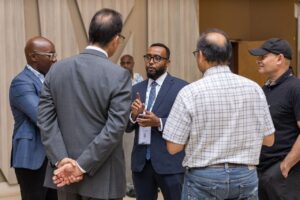
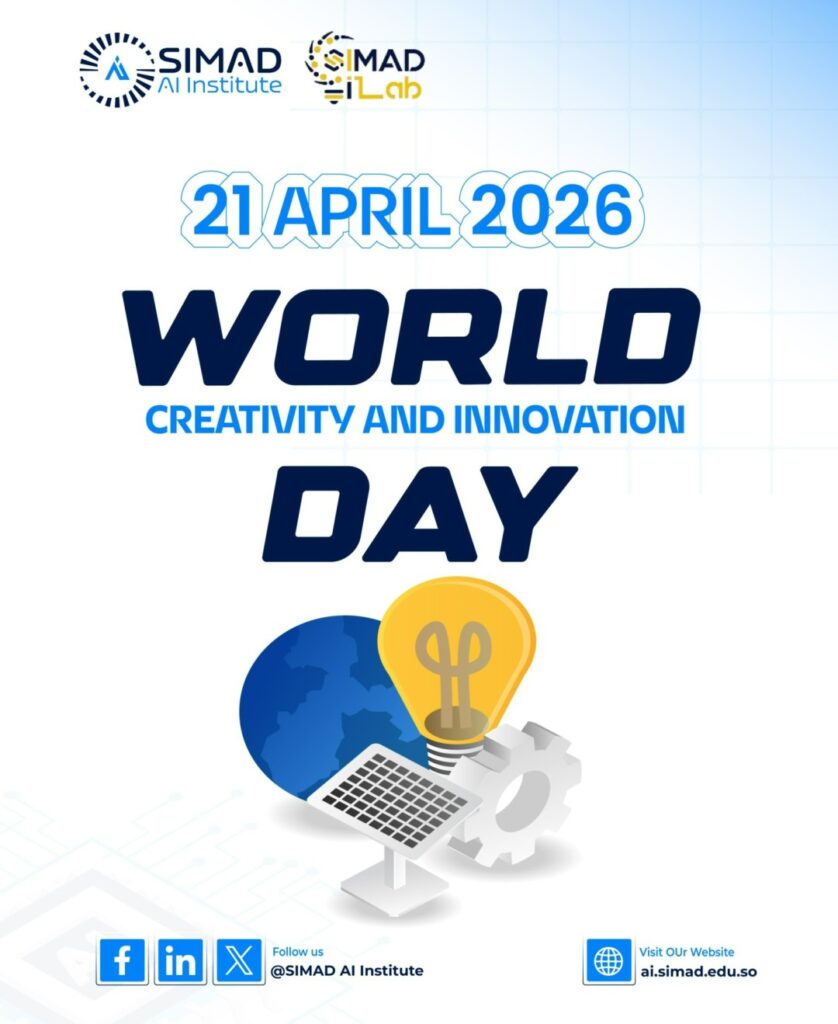
SIMAD AI Institute, in collaboration with SIMAD Innovation Lab, hosted a panel discussion to mark World Creativity and Innovation Day at SIMAD University Town Campus. The event brought together experts, students, and innovators to discuss how artificial intelligence supports creativity and drives innovation in Somalia.
The panel focused on the theme “Creativity in the Age of AI: Empowering Somali Innovators for the Future.” It created a space for open and practical discussion on how AI tools support problem solving, entrepreneurship, and education in the Somali context.
About the Event
The event aimed to connect creativity with emerging technologies. Participants explored how Somali youth and professionals can apply AI in real projects across sectors such as education, business, and public policy.
The session was moderated by Mr. Osman Aded, who guided the discussion and engaged both panelists and the audience in meaningful dialogue.
Panel Speakers and Insights
The panel featured a diverse group of experts with strong experience in AI, innovation, and policy.
Eng. Mahad Hassan, AI Strategist and Innovation expert from Ilmiye Academy USA, shared practical examples of how startups apply AI tools to improve efficiency and reduce operational costs.
Dr. Yahye Abukar, Director and Strategic AI Lead at SIMAD AI Institute, highlighted the role of institutions in building AI systems that address local challenges. He emphasized the importance of data, research, and talent development.
Ms. Anisa Nur, Education Policy Specialist from the Office of the Prime Minister, discussed how policy frameworks support innovation. She explained how governments can promote AI adoption through education reform and strategic planning.
Key Discussion Areas
The panel covered several important ideas raised during the discussion:
- How AI has changed creativity in real technical ways
- The need to fix and support startup ecosystems in Somalia
- The importance of building strong skills, the right mindset, and access to tools
- How to identify real AI capability and avoid weak or misleading solutions
- How AI changes the way people work, learn, and solve problems
- The urgency of learning AI now instead of delaying
- How AI can be integrated into education systems
- The growing opportunities created by AI across sectors
- The shift from resisting AI to adapting to it
- The ability for Somali professionals to work globally while based locally
- The role of AI in improving business efficiency and growth
One important message from the panel stood out clearly. Students should not feel like suspects, and teachers should not act like police when it comes to using AI. Instead, both sides should work together to use AI responsibly for learning and innovation.
Audience Engagement
Participants asked direct questions about how to start, what skills to learn, and how to compete globally. Many were concerned about limited resources.
Panelists gave clear advice. Focus on practical skills such as data analysis, problem solving, and basic programming. Use available AI tools to practice daily. Work on real problems instead of only theory.
Outcomes and Future Direction
The discussion led to several clear outcomes.
- There is a strong need for collaboration between private education sectors, government institutions, and industries to address AI challenges together.
- Somalia must shift from avoiding change to adapting quickly to AI developments.
- AI creates opportunities now, not in the distant future. Delay will increase the gap with other countries.
- Education systems must change to include AI skills at all levels.
- Young professionals in Somalia have the ability to work with global markets using AI tools.
- The panel reinforced one key direction. The country needs coordinated effort across sectors to build an AI-ready society.
SIMAD AI Institute will continue to lead initiatives that promote AI awareness, skills development, and collaboration across sectors.
This event reflects SIMAD University’s commitment to preparing students and professionals for a future shaped by technology and innovation.